 Pin it
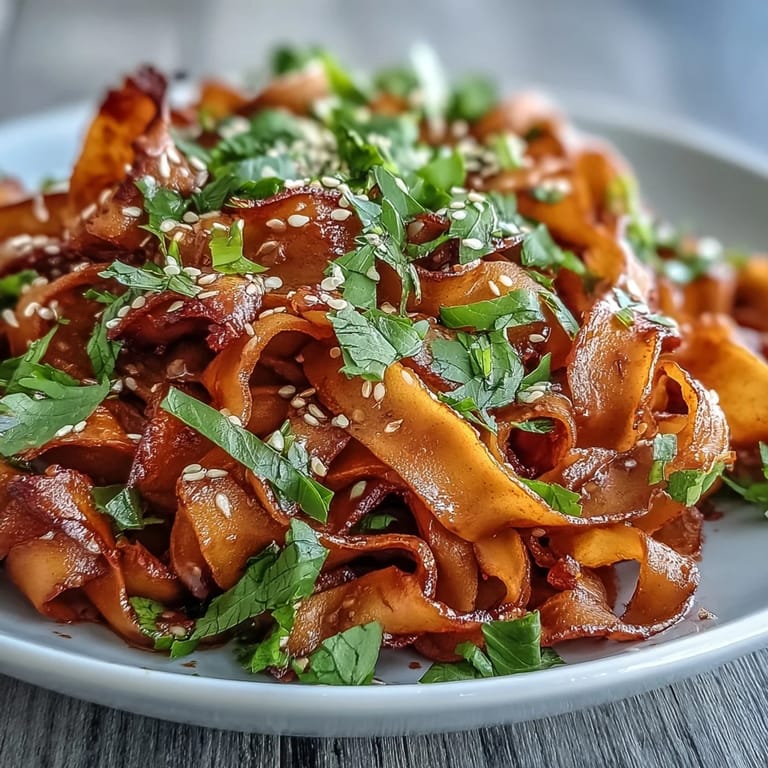
 I stood in my kitchen staring at this massive swede, wondering what on earth possessed me to buy something the size of a small child's head. My friend Jin had been raving about how root vegetables take on this incredible sweetness when roasted, and I'd been itching to try something different from my usual vegetable rotation. The gochujang paste in my fridge caught my eye— that funky, fermented Korean chili paste that makes everything taste better. On a whim, I decided to marry them together. What happened next completely changed how I think about humble root vegetables.
Last winter, when my sister came over complaining about being tired of heavy comfort food, I threw this together on impulse. We ended up sitting at the kitchen table in our sweatpants, completely ignoring the fancy plates I'd set out, eating straight from the mixing bowl. She messaged me the next day saying she'd dreamed about those noodles. Sometimes the simplest experiments become the ones people actually remember.
Ingredients
- 1 large swede (rutabaga): I know peeling this beast feels like a workout, but roasting transforms it into something surprisingly tender and naturally sweet— worth every minute of wrestling with it
- 250 g dried rice noodles: These have the perfect slippery texture to catch all that sauce, plus they stay firm instead of getting mushy like wheat noodles might
- 3 tbsp gochujang: This fermented Korean chili paste is the backbone of the whole dish— look for one with good depth, not just heat
- 1 ½ tbsp soy sauce: Brings that salty foundation that balances the sweetness of the maple syrup and roasted vegetables
- 2 tbsp maple syrup or honey: Cuts through the heat and creates this gorgeous sticky coating that clings to every ribbon of swede
- 1 tbsp rice vinegar: Adds just enough brightness to keep everything from feeling too heavy or cloying
- 1 tbsp toasted sesame oil: Don't even think about skipping this— it's what makes the dish smell like you actually know what you're doing
- 2 spring onions, thinly sliced: Their sharp fresh crunch is perfect against all that soft roasted sweetness
Tired of Takeout? 🥡
Get 10 meals you can make faster than delivery arrives. Seriously.
One email. No spam. Unsubscribe anytime.
Instructions
- Get your swede into ribbons:
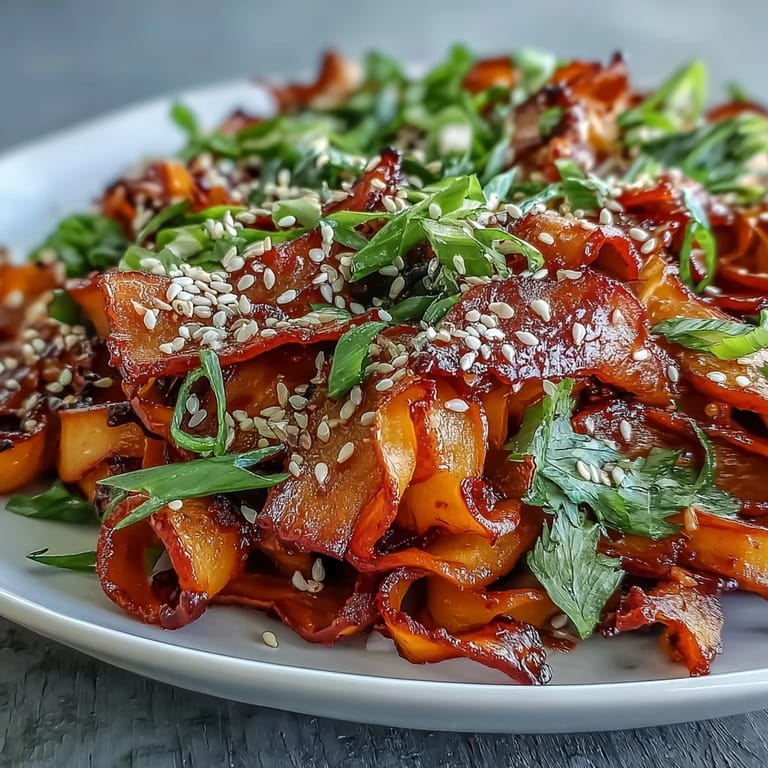
- I use a vegetable peeler for wider, more noodle-like ribbons that feel luxurious, but a julienne peeler works too if you want thinner strands. The shape matters— bigger ribbons roast better and hold more sauce.
- Roast until golden and tender:
- Spread those ribbons on your baking sheet without crowding them too much— they need space to get properly caramelized in that hot oven. Turn them halfway through so both sides get that gorgeous golden edge.
- Whisk your sauce while things roast:
- Get all your dressing ingredients in a bowl and whisk until smooth. The consistency should be thick but pourable— thin it with water if it's clinging to the whisk too stubbornly.
- Bring everything together:
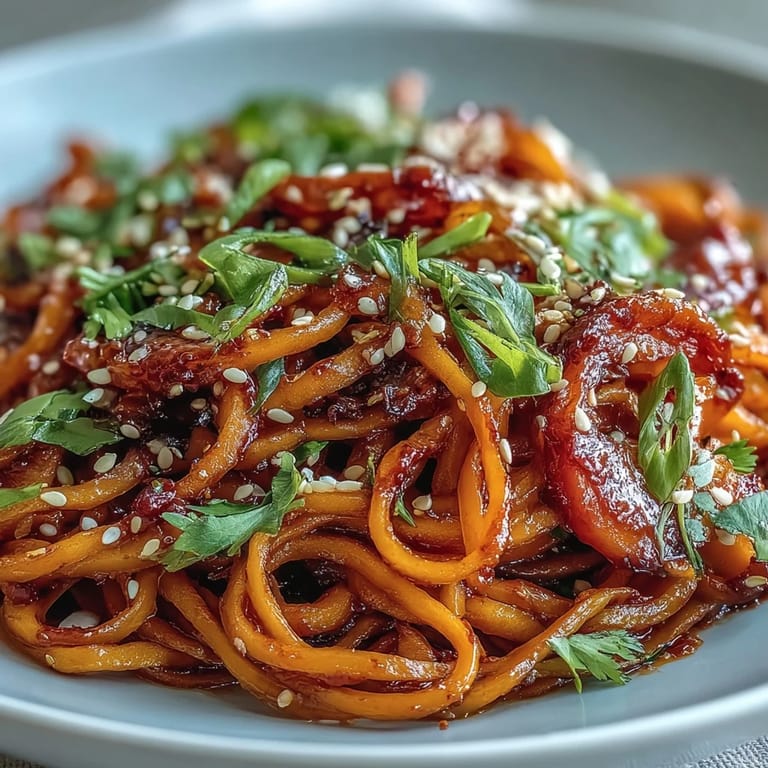
- Toss the hot roasted swede right into your noodles while they're still warm, then pour over that dressing. The heat helps the sauce penetrate everything better than if you waited.
 Pin it
 This dish has become my go-to when friends come over and I want to serve something that looks impressive but doesn't require me to be stuck at the stove while everyone else is hanging out. The best part is watching people take that first tentative bite, eyes widening, reaching for seconds before they've even finished chewing.
Making It Your Own
I've discovered that pan-fried tofu cubes or crispy edamame turn this into something substantial enough for dinner proper. Sometimes I'll add quick-pickled vegetables on the side for extra crunch and acidity. The sauce works beautifully on basically anything roasted— sweet potato, regular potatoes, even cauliflower if you're feeling adventurous.
Getting The Texture Right
The magic is in that contrast between the tender roasted ribbons and the slightly chewy noodles, all slicked with sauce that hits sweet, salty, spicy, and savory all at once. Don't rush the roasting step— those golden edges are where all the flavor lives. I've learned that overcrowding the baking sheet is the enemy of good caramelization, so use two sheets if you need to.
Serving & Storage
This is best eaten immediately while the noodles still have some bounce and the swede retains that roasted sweetness. Leftovers keep reasonably well for a day, though the noodles will soften as they sit. If you're meal prepping, store the sauce separately and toss everything together right before serving— the dish tastes infinitely fresher that way.
- A cold beer or crisp Riesling cuts through the spice beautifully
- Extra cilantro on top never hurt anyone
- Lime wedges on the side let people adjust the acidity to their taste
 Pin it
 There's something deeply satisfying about turning an overlooked vegetable into something people get excited about. This dish reminds me that the best recipes often come from just playing with what's in the fridge.
Recipe FAQs
- → Can I make this gluten-free?
Yes, to ensure this dish is gluten-free, use tamari instead of regular soy sauce and carefully check the label of your gochujang to confirm it is gluten-free.
- → What can I add for extra protein?
For a protein boost, consider adding pan-fried tofu cubes, edamame, or even chickpeas to the dish. These additions complement the flavors wonderfully.
- → What is swede (rutabaga)?
Swede, also known as rutabaga, is a root vegetable with a subtly sweet, slightly earthy, and peppery flavor. When roasted, it becomes tender and takes on a delightful sweetness, making it an excellent base for this dish.
- → How long does this dish keep in the refrigerator?
This dish is best enjoyed fresh. However, any leftovers can be stored in an airtight container in the refrigerator for up to 2-3 days. The noodles may absorb more dressing over time.
- → Can I adjust the spice level?
Absolutely. The spice level can be easily customized. For a milder flavor, reduce or omit the chili flakes in the dressing. For those who prefer more heat, feel free to add a little extra.
- → Are there any good wine pairings for this dish?
For an excellent pairing, consider a crisp and aromatic white wine such as a dry Riesling. Its bright acidity and fruity notes can beautifully balance the spicy and savory flavors of the gochujang. A light lager also works well.