 Pin it
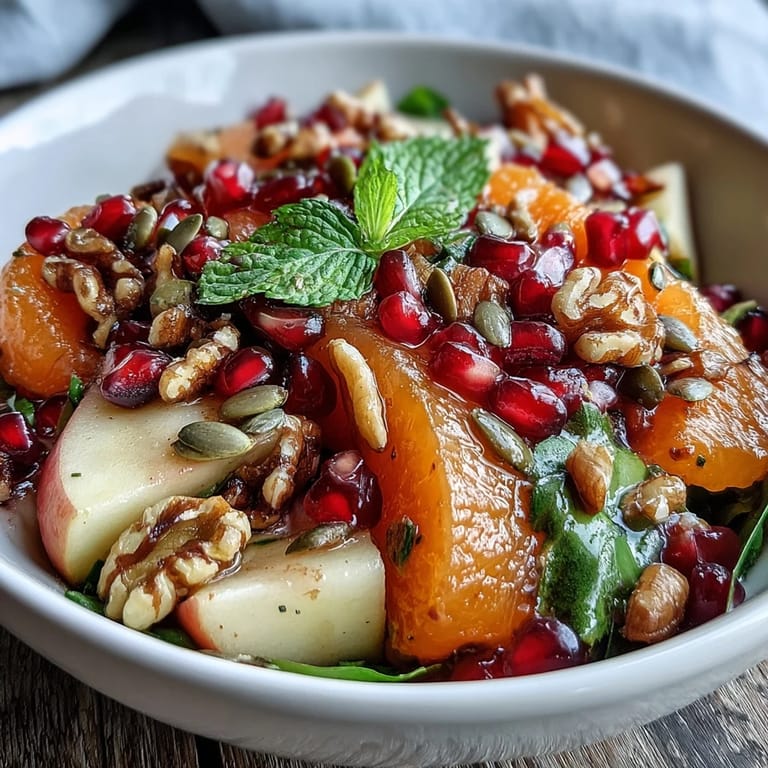
 My neighbor knocked on my door one December afternoon with a pomegranate in hand, insisting I needed to try making a salad that actually tasted like winter felt—bright, crisp, and somehow warming all at once. I was skeptical about mixing fruit with walnuts until the first bite hit, and suddenly I understood why she'd made the trip. That salad changed how I thought about winter eating entirely, turning those cold months from something to endure into something to celebrate.
The first time I made this for a potluck, I arrived at the party convinced it would be overshadowed by heavier casseroles and warm dishes. Instead, people kept coming back to it, asking for the recipe with genuine surprise in their voices. That's when I realized some of the best dishes don't announce themselves loudly—they just quietly win you over with their honesty.
Ingredients
- Pomegranate, 1 large: Those jewel-like arils are where the magic happens, bursting with tart-sweet juice and real pomegranate flavor that no bottled juice can match.
- Orange, 1 large: The natural sweetness and acidity balance the pomegranate beautifully, plus the segments add pockets of citrus brightness throughout.
- Apple, 1 crisp: Choose something like a Honeycrisp or Granny Smith to keep the salad from turning soft and mushy.
- Pear, 1 ripe: The pear softens slightly as it sits, creating a luxurious texture that walnuts play off perfectly.
- Walnuts, 1/2 cup roughly chopped: Toasting them first brings out an earthiness that transforms the whole dish, though raw works fine in a pinch.
- Pumpkin seeds, 2 tbsp: These add a subtle nuttiness and protein boost without overwhelming the delicate fruit flavors.
- Sunflower seeds, 2 tbsp: They stay crispy and provide a gentle crunch that persists even after the dressing hits.
- Extra-virgin olive oil, 2 tbsp: Don't skimp here—use one you actually enjoy tasting, because it's the foundation of everything.
- Lemon juice, 1 tbsp freshly squeezed: Fresh matters more than you'd think; bottled just tastes tired by comparison.
- Honey or maple syrup, 1 tsp: A touch of sweetness that doesn't dominate, just whispers in the background.
- Ground cinnamon, 1/4 tsp: This is the secret weapon—it somehow makes the fruit taste more like itself.
- Sea salt, pinch: The final detail that brings everything into focus and prevents the salad from tasting one-dimensional.
- Fresh mint, 2 tbsp chopped (optional): If you have it, add it at the last second so it stays vibrant and doesn't bruise.
Tired of Takeout? 🥡
Get 10 meals you can make faster than delivery arrives. Seriously.
One email. No spam. Unsubscribe anytime.
Instructions
- Gather your fruit like you're composing a still life:
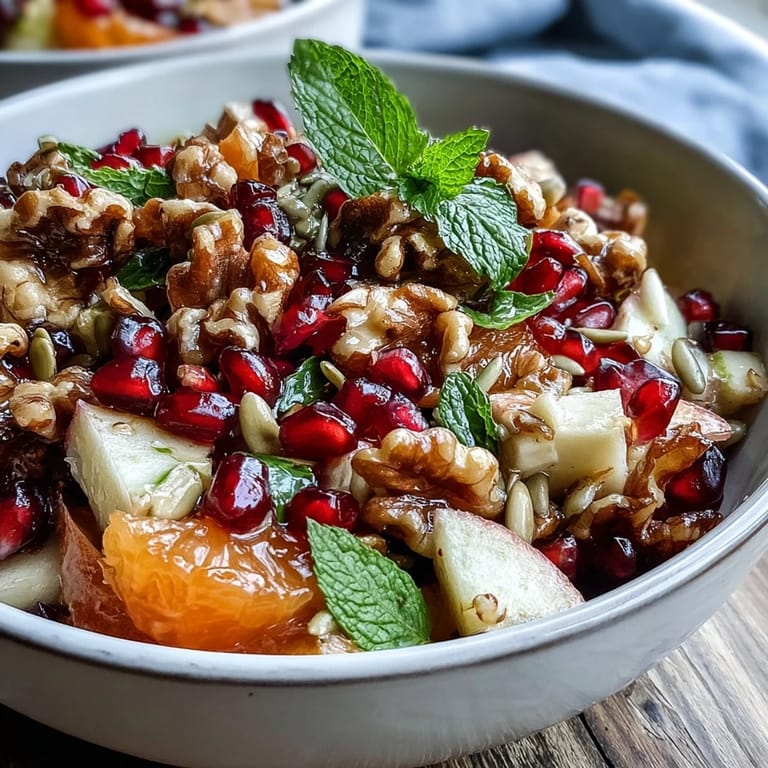
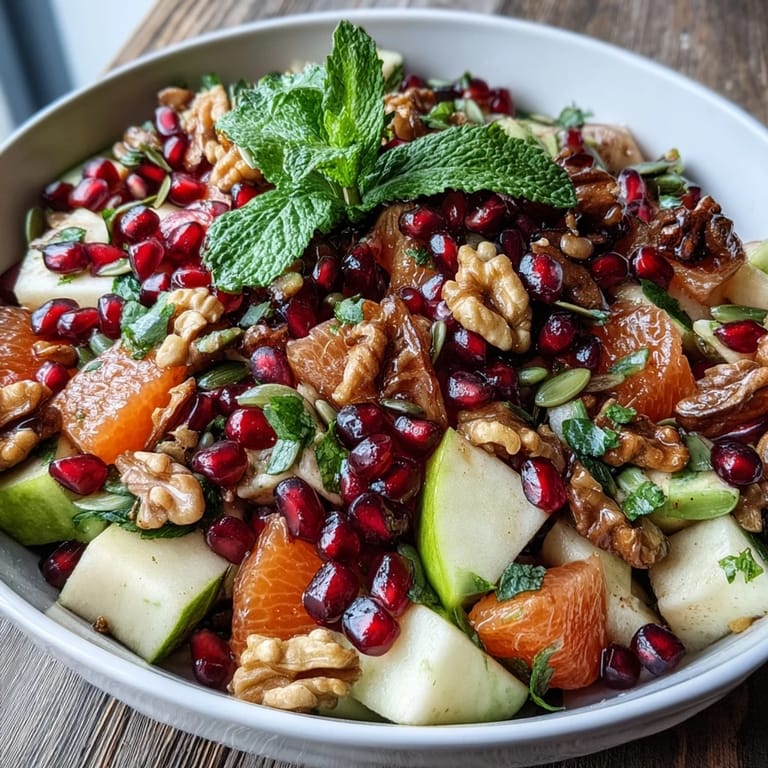
- Combine pomegranate seeds, orange segments, diced apple, and diced pear in a large bowl. The fruit should look inviting even before the dressing touches it.
- Add the crunch:
- Toss in the walnuts, pumpkin seeds, and sunflower seeds. This is where the salad goes from pleasant to interesting.
- Make the whisper of a dressing:
- In a small bowl, whisk together olive oil, lemon juice, honey, cinnamon, and sea salt until the honey fully dissolves and everything comes together. The dressing should taste balanced—not too sharp, not too sweet.
- Bring it all together gently:
- Drizzle the dressing over everything and toss with a light hand, letting the fruits and nuts mingle without getting bruised. You want them to coat evenly but stay whole.
- Finish if you're feeling it:
- Scatter fresh mint over the top right before serving if you have it. If not, the salad is already complete without it.
- Serve when it feels right:
- This salad is lovely immediately, but honestly, letting it sit for 20 minutes to 2 hours lets the flavors settle into something even more cohesive and lovely.
 Pin it
 There was an evening when my daughter refused to eat anything green or vegetable-adjacent, and I quietly served her this salad without fanfare, not expecting much. She ate the whole bowl and asked if I could make it again next week. Sometimes the dishes that help us feed people we love aren't the complicated ones—they're the ones that taste like they're on your side.
When to Toast Your Nuts and Seeds
Toasting makes a real difference, but it requires maybe two minutes of attention and a dry pan. Heat your walnuts and seeds over medium heat, stirring frequently until they're fragrant and just slightly darker. Let them cool completely before adding to the salad, or the warmth will start breaking down the dressing. It's one of those small moves that costs nothing but transforms everything.
Playing with the Fruit Combination
This salad thrives on flexibility, which is actually its greatest strength. Pomegranate is non-negotiable for me, but everything else can shift with seasons and what's fresh. Winter calls for pears and oranges, while late summer might welcome berries and stone fruits instead. The structure stays solid—you're always mixing tart with sweet, crunchy with tender—so you can follow your instincts and the farmers market.
The Dressing That Whispers Instead of Shouts
A common mistake with fruit salads is making the dressing too aggressive, letting acid or sweetness dominate and drowning out the natural flavors you went to the trouble of selecting. This dressing is intentionally restrained, with cinnamon acting as a bridge that lets the fruit sing louder. The lesson I learned was that sometimes less really is more, and the best seasoning is the kind you notice only after it's gone.
- The cinnamon is optional but worth the effort—it doesn't make the salad taste spiced, just more fully itself.
- If you prefer sweeter, add another half teaspoon of honey, but taste before you pour.
- Make the dressing separately so you can adjust it to your preference before committing it to the salad.
 Pin it
 This salad taught me that the simplest dishes often carry the most meaning, turning an ordinary winter afternoon into something memorable. Make it often enough, and it becomes part of who you are in the kitchen.
Recipe FAQs
- → How long can I store this salad?
Best served immediately for maximum crunch, though refrigeration for up to 2 hours allows flavors to meld. The dressing may soften apples and pears if stored longer.
- → Can I prepare components ahead?
Yes—seed pomegranates, segment citrus, and dice fruits up to 24 hours ahead. Store separately in airtight containers. Toast nuts and prepare dressing just before assembling.
- → What fruits work well as substitutions?
Persimmons replace pears beautifully. Try kiwi instead of apples for extra vitamin C. Pomegranate seeds can be swapped with fresh cranberries during winter months.
- → How do I easily remove pomegranate seeds?
Score the fruit's skin into quarters, then submerge in a bowl of water. Break sections apart underwater—seeds will sink while white pith floats, making separation mess-free.
- → Is this suitable for meal prep?
Components store well separately for 2-3 days. Keep dressed portions minimal—optimal texture results from tossing with dressing just before eating.
- → Can I make this vegan?
Simply swap honey for maple syrup in the dressing. All other ingredients, including walnuts and seeds, are naturally plant-based.